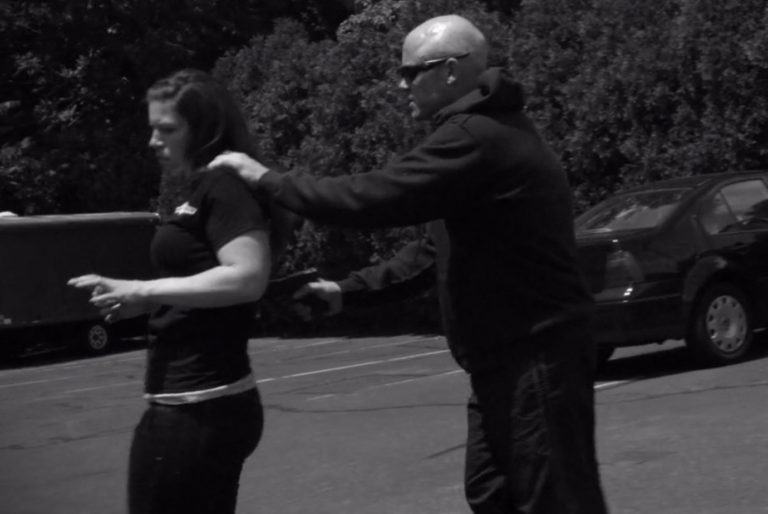


If you think there are “rules” in a street fight, you don’t understand the problem.
There’s a ridiculous idea floating around — that fights happen by polite code, like some backyard version of the Octagon. That two people will square up, trade nice combos, and keep score because somebody forgot to tell them they’re not in a sanctioned match. Let me cut to the point: street fights don’t have rules. If you’re counting on them, you’re already losing.
I always tell students in class: “If you’re fighting a fair fight, your tactics suck.” That’s not macho talk — it’s the survival calculus. On a sidewalk, in a bar, or behind a dorm building, the thing that keeps you walking away isn’t flash combinations or beautiful technique; it’s how quickly you break the attacker’s plan and insert uncertainty.
Most aggressors run on a script. Their brain is quietly narrating how the encounter will go: quick strike, victim startled, attacker keeps momentum. That script is their confidence. You have one powerful lever — deviate from the script and throw them into the OODA loop (Observe → Orient → Decide → Act). Confusion is a tool. When you do something they didn’t expect — bite, spit, scream, make a sudden loud animal sound — their mental model collapses. Hesitation replaces momentum. Fear replaces arrogance. That split-second is your exit.
Now — a reality check for the purists: even in the UFC, where we accept sport rules, there are specific fouls and boundaries fighters must obey. The Unified Rules list the fouls a competitor cannot do — roughly 27 items on the classic list that promotions enforce to keep things “sporting.” That’s inside a regulated cage; in the real world there’s no referee to protect you.
At Krav Maga Essentials we teach this with structure, not panic. Our approach is simple and practical:
1. Escape first — Everything we drill ends with moving away. Disruption buys time; distance secures it. We train loud, ugly, decisive interruptions only to create an opening to exit.
2. Controlled unpredictability — In partnered drills we rehearse unexpectedly disruptive reactions (shout, flinch, drop weight, simulated bite/grab response, hard palm to create separation). Those actions are practiced in a safe, supervised way so your nervous system knows how to do them without freezing.
3. OODA drills — We practice scenarios where the attacker expects a compliant target. Students intentionally break that expectation and watch the attacker hesitate. We time the gap and teach how to exploit it.
4. Boundary & presence work — Command presence and verbal boundaries are taught before any physicality; often the best “fight” is the one you never have.
5. Legal & ethical framing — We make clear what we teach is for defense and escape. If you have to cross lines, it’s to stop a threat and get away. We cover the legal basics so students understand proportionality and after-action steps.
We make it look less scary by training it until it’s routine. The idea isn’t to glorify violence — it’s to condition practical, survive-first responses so your body and mind react instead of freeze
Why “dirty” works — the psychology
Fighting dirty isn’t about cruelty; it’s about psychology. Attackers think they’re following a plan. When you become an unpredictable variable, you force them to re-evaluate. Humans hate uncalculated risk. When an attacker perceives you as unstable, irrational, or willing to cross boundaries, their risk calculus often flips to “not worth it.” That’s the leverage you want.
A short, practical checklist
– Practice one loud, aggressive disruption (shout + shove step) and immediately move away.
– Drill surprise-response once a week until it’s automatic.
– Keep it proportional: disrupt, create distance, escape.
– Know local self-defense law basics — the legal system will judge your actions later.
– Train command presence daily (posture, eye contact, voice).
The only “rule” that matters on the street is this: stay alive, get away, and don’t make it worse. At Krav Maga Essentials we give you the tools — psychological, verbal, and physical — so you can apply that rule when the script goes bad.