
Here’s the hard truth: panic isn’t fear. Panic is what happens when your brain has nothing useful to grab onto.
Decades ago, during my early training, I learned an old saying that still sticks with me: “When in trouble or in doubt, run in circles, scream and shout.” It gets a laugh—and it should—but it also nails a brutal reality. That’s exactly what untrained people do under real stress. They don’t fall apart because they’re weak. They fall apart because they have no structure to work from.
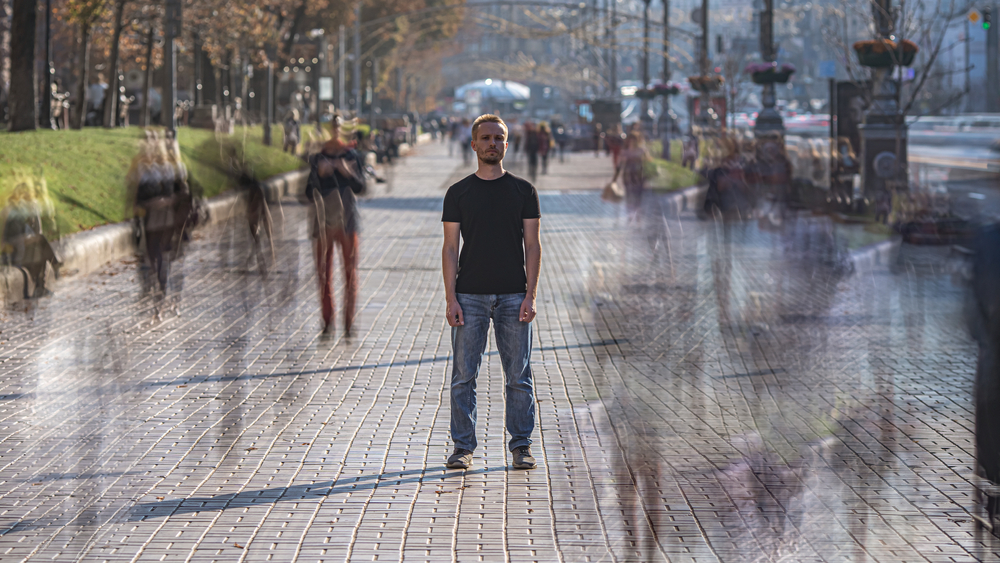
At its core, violence is chaos.
It is unpredictable, fast, emotionally charged, and resistant to logic. It doesn’t follow rules, timelines, or polite social scripts. And the more chaotic a situation becomes, the harder it is for an unprepared mind to function inside it. Panic isn’t caused by danger alone—it’s caused by being dropped into chaos without a framework.
Fear is different. Fear is information. Fear comes from recognizing danger and understanding its consequences. Fear sharpens awareness. Panic scrambles it. Panic is realizing—consciously or not—that you don’t know what to do next.
I’ve seen this distinction play out over and over again—in training rooms, in debriefs after real-world incidents, and in the stories people bring back after something went wrong. The people who panicked weren’t reckless or foolish. They were simply unprepared for chaos. They hadn’t built a mental map of options, so when pressure hit, their brains defaulted to noise instead of direction.
This is where most advice completely misses the point. Telling someone to “stay calm” is useless. Calm isn’t a personality trait. Calm is a temporary side effect of structure.
Self-defense is not about dominating chaos. It’s about creating moments of order inside it.
That’s all it really is.
A few seconds where you understand distance.
A moment where priorities are clear.
A brief window where your actions are deliberate instead of emotional.
Those moments don’t eliminate violence—but they allow you to move through it. They let you disrupt, escape, and survive.
Decisiveness isn’t about courage. It’s about clarity.
When you understand distance, timing, positioning, and priorities, your decision-making speeds up. You stop debating and start acting. Action replaces emotion. Structure interrupts chaos. Your body responds because your mind knows what matters most right now—and what doesn’t.
Without that structure, people hesitate. They apologize when space is violated. They freeze when movement is required. Or they explode emotionally and make the situation worse. That isn’t a character flaw—it’s a training gap.
The purpose of real self-defense training is not to make you aggressive. It’s to give your mind something reliable to fall back on when chaos strips away comfort and fine thinking. Simple rules. Clear priorities. Practiced responses. That’s what keeps fear useful and prevents panic from taking control.
At Krav Maga Essentials, that’s exactly what we do. We don’t just teach techniques—we organize thinking. We train people to create moments of structure inside chaos so that action becomes instinctive, purposeful, and survivable when it matters most.