
A few weeks ago, I wrote about walking with a cane.
About how it changes movement.
How it forces adaptation.
How Krav Maga adjusts to you—not the other way around.
That’s all true.
But there’s another layer I didn’t fully appreciate until I started moving through the world this way every day.
It’s not just that I feel different.
It’s that the room treats me differently.
The Moment You Walk In
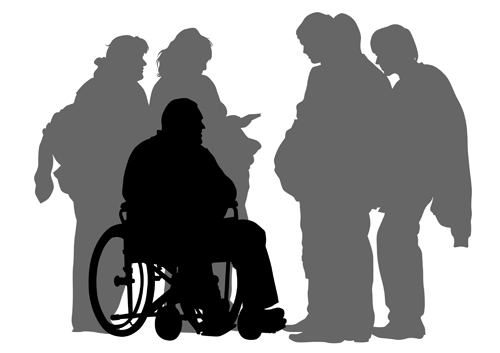
Every time I walk into a restaurant, a store, or any public space right now, there’s a shift.
You can feel it.
Conversations pause for a beat.
Eyes track.
People assess.
Some of it is concern.
Some of it is curiosity.
Some of it is something else entirely.
Evaluation.
And whether people realize it or not, that evaluation includes one simple question:
“What am I looking at here?”
Strong?
Injured?
Vulnerable?
Capable?
That judgment is happening instantly.
You Are Being Profiled in Real Time
We talk a lot about awareness in Krav Maga Essentials in Norwalk.
Most people think that means you observing others.
But it’s a two-way street.
They’re observing you too.
And when you introduce a visible constraint—a cane, an injury, a change in movement—you’ve just altered the first impression.
That doesn’t automatically make you a target.
But it does change the equation.
Because now, your physical capability is being questioned before you ever say a word.
This Is Where the Mental Edge Takes Over
When your body isn’t at 100%, your mindset has to be sharper than usual.
Not louder. Not aggressive.
Sharper.
I’ve become more intentional about things that most people leave to autopilot:
Where I position myself when I walk in
What I can see—and who can see me
How close people are allowed to get
How early I make decisions
There’s less margin now.
So everything happens earlier.
That’s the shift.
Presence Becomes Your First Line of Defense
Here’s what most people miss:
When you walk into a room with a visible limitation, people don’t just notice the limitation.
They read how you carry it.
If you look disconnected, unsure, or inward-focused, that gets picked up immediately.
If you look aware, composed, and deliberate—that gets picked up too.
That’s not theory. That’s observable behavior.
Predators don’t look for the weakest person.
They look for the person who appears easiest to manage.
And “easy” is often a mental signal, not a physical one.
You Don’t Get to Be Late Anymore
When you’re fully mobile, you can afford small mistakes.
You can adjust. Recover. Move.
When you’re not?
You don’t get to be late.
Late awareness.
Late decisions.
Late reactions.
Those become problems immediately.
So the focus shifts:
You notice things sooner
You create space earlier
You make decisions faster
Not because you want to.
Because you have to.
This Is the Real Value of Training
The cane didn’t make me more aware.
The training did.
The cane just removed the illusion that awareness was optional.
That’s the difference.
At Krav Maga Essentials in Norwalk, we don’t train people to be at their best.
We train them to function when things are off.
When they’re tired.
Distracted.
Limited.
Or, in this case, walking into a room where they are immediately being evaluated.
The Progression
The first lesson is physical:
Adapt your tactics to your condition.
The next lesson is mental:
Understand how your condition changes perception—and adjust before it matters.
Because the reality is simple:
You don’t control how people see you when you walk into a room.
But you absolutely control what they read after that first look.
Right now, I’m walking with a cane.
And every room I enter reminds me of something important:
Self-defense doesn’t start when something happens.
It starts the moment you’re seen.