

A student came up to me after class last weekend and said, “I was thinking about you this weekend.”
Then he told me the story.
He was driving when someone cut him off — aggressively, the kind of move that gets your blood up instantly. They both ended up stopped a moment later, right next to each other. His first instinct kicked in hard: slam the horn. Roll down the window. Say something. Let the guy know exactly what he thought of him.
And then he remembered something we talk about all the time in class.
There was no victory waiting for him out of that car. Nothing good was on the other side of that confrontation. The only smart move — the only safe move — was to leave.
So he did. He drove off. And he told me it felt strange at first, like he’d let something go unfinished. But by the time he got home, he understood it differently. He hadn’t lost anything. He’d won the only thing that mattered.
That’s one of the hardest lessons we teach at Krav Maga Essentials in Norwalk. It isn’t a punch, a kick, or an escape technique.
It’s a mindset.
You can be right, or you can be safe.
Most people believe those two things always travel together. They don’t. Some of the most dangerous situations on earth start because someone simply could not let go of being right.
Think about the arguments you’ve witnessed that spiraled way past anything reasonable. A dispute in traffic. A fight over a parking space. A rude comment in a restaurant. An insult at a bar. In most of these cases, nobody is fighting over something that actually matters. They’re fighting because they feel disrespected, challenged, or embarrassed.
The need to prove a point becomes stronger than the instinct to survive.
We call it the ego trap.
The ego trap tells you that backing down is weakness. That walking away means losing. That if you don’t respond, you’ve somehow surrendered your dignity.
The truth is the exact opposite.
Walking away from a confrontation is often the strongest, smartest thing a person can do. My student understood that, sitting in his car with his hand hovering near the horn. He chose the strong option. He drove away.
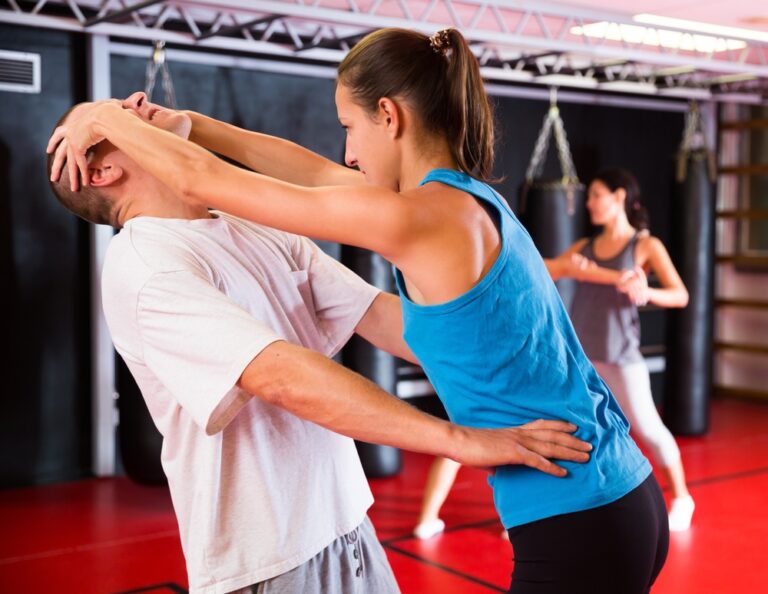
At Krav Maga Essentials in Norwalk, Connecticut, we teach that self-defense begins long before physical techniques ever come into play. Awareness, avoidance, de-escalation, and decision-making matter every bit as much as strikes, defenses, and escapes.
The goal of self-defense is not to win fights.
The goal is to get home safely.
That distinction matters. A person can “win” a fight and still walk away with serious injuries, legal consequences, financial costs, or emotional trauma. Even a justified use of force can mean months or years of stress and complications.
So we train our students to keep asking themselves one simple question:
“What am I really fighting for?”
Is the issue worth risking injury? Worth risking arrest? Worth risking your future?
Most of the time, the answer is no.
Violent people often understand something law-abiding citizens forget: violence is unpredictable. Nobody truly controls what happens once a physical confrontation begins. A single punch can cause a life-changing injury. A minor dispute can turn deadly. That guy who cut my student off? Neither of them knew what the other was capable of. Walking away meant never having to find out.
This is why situational awareness and conflict management sit at the center of our Krav Maga training in Norwalk. We teach students to recognize danger early, manage their emotions under stress, and avoid getting trapped by their own pride.
There are absolutely times when physical self-defense becomes necessary. When that moment comes, decisive action is required, and we train hard for it.
But the highest level of self-defense is avoiding the unnecessary fight altogether.
So the next time someone cuts you off in traffic, insults you online, challenges you in public, or tries to bait you into an argument, remember what my student remembered:
You don’t have to prove anything.
You don’t have to win every confrontation.
You don’t have to be right.
You just have to be safe.
And in the real world, that’s the victory that matters most.