

A private student pushed back on me a few weeks ago.
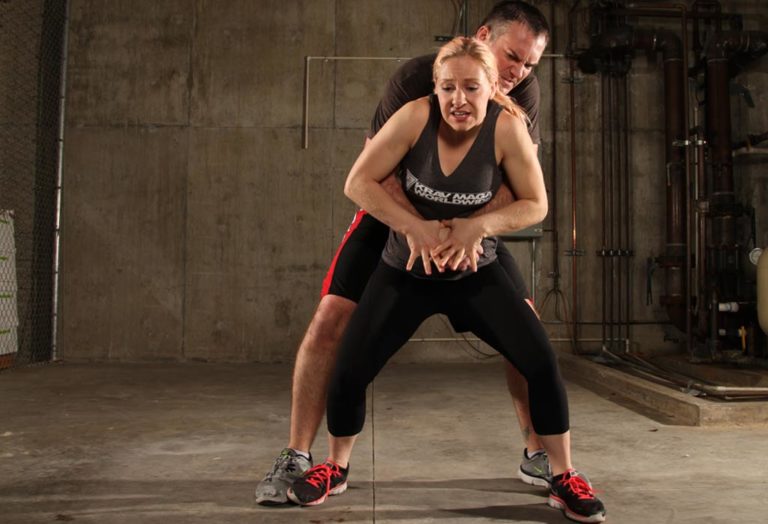
Ten minutes in, I told him we were reviewing the defense against a two-handed choke against the wall. He made a face. “We did that already. Can we work on something new?”
I hear this a lot in privates. People pay for the hour and want new material for their money.
I said, “Sure. Show me the old one first.”
He got about a third of the way through before his hands went somewhere they had no business going. His base collapsed. He stopped, laughed, and said, “Wait — I know this. I know it.”
I believe him. He did know it.
He just couldn’t do it.
We spent the rest of the hour on the thing he’d already done.
Knowing and doing are two different skills
There’s a version of learning we all grew up with. Read the chapter, listen to the lecture, show up with a blue book and write down what you remember. If it matches what the professor said, you pass.
That works fine for history. It does not work for this. Nobody hands you a blue book in a parking garage. You don’t get partial credit for understanding the concept.
Here’s the trap, and it isn’t stupidity — it’s how brains work. When you watch a technique, your brain follows along, tracks the movement, and files it under *got it*. That feeling is real. It’s the same feeling you get watching someone parallel park perfectly. It registers as competence because it uses the same circuit.
But what you acquired was recognition. You can identify the technique. You can describe it at a dinner party. Your body didn’t learn anything.
Right isn’t the finish line
Here’s the standard I hold my students to, and myself:
**You don’t drill a technique until you can do it right. You drill it until you can’t do it wrong.**
Those are nowhere near each other. Doing it right once means conditions lined up and you executed. That’s the beginning. Not being able to do it wrong means the movement has become the path of least resistance in your body — under fatigue, under surprise, under fear, the wrong version isn’t available to you because you never built it.
Most people quit at “right.” That’s why most people can describe a defense they can’t perform.
It won’t be your training partner
**He’ll be a different size.** If you only drill with someone your height and build, you’ve learned one version — the version where your hands land where you expect. Six inches taller and your frame is somewhere else. Eighty pounds heavier and the angle you were counting on isn’t there. Smaller and faster and your timing is late. A technique that only works against one body type is a party trick.
**The ground will be different.** Mats are flat, clean, dry, forgiving. Real life is a curb, wet pavement, gravel, stairs, a car door at your back, ice in February. You can’t pivot the way you pivot in class if your foot won’t grip — and half of what we teach is built on that pivot.
**And you won’t be you.** Adrenaline is a chemical event, not a mood. Vision narrows, so you lose the periphery you needed to see the second guy. Fine motor control degrades, so anything requiring a precise grip is gone. Hands shake. And the part of your brain that recalls sequences goes offline first — the exact part that “knew” the technique.
Twenty-five years of teaching and I’ve never met anyone immune. I’m not immune.
“How long until I’m good?”
I get this in almost every intro conversation. It’s a fair question with the wrong unit of measurement. People ask about time. The answer is in repetitions.
In six months to a year, you’ll have been *exposed* to the material. You’ll know what each defense looks like and you’ll be able to walk me through any of them. That’s real progress.
You won’t be good at it yet.
Good is instant recall plus application under conditions you didn’t pick. Good means it shows up on its own, correctly, against a body you’ve never faced, on footing you didn’t expect, while your hands are shaking. Good means you can adapt in the moment because you’ve done the base version enough times to afford improvising off it.
That doesn’t come from a calendar. Two students can start the same night and finish the year in completely different places. One collected techniques. The other built one.
The good news
You don’t need to be young or strong or fast. Imi built this system for people who were none of those things. You need reps — boring, repetitive, and available to anyone who shows up.
So show up. Do the rep you’re sure you don’t need. Do it against someone built nothing like you. Then do it again.
Not until you can do it right. Until you can’t do it wrong.
There’s no essay portion