
If you’re serious about real-world self-defense—especially training with Krav Maga Essentials in Norwalk—you’ll run into two approaches: aggression-based training and technique-driven drilling. Both have value. But they are not equal, and they are not used the same way.
Aggression training is what most people expect. It’s fast, loud, and chaotic. It simulates the intensity of an OSM—an Oh Shit Moment—where adrenaline spikes and decisions have to be made instantly. This kind of training builds commitment, stamina, and your ability to function under stress. You need that.
But here’s the reality: aggression without precision doesn’t hold up.
When everything is rushed, your brain can’t process details. Strikes land off-target. Footwork breaks down. Balance disappears. You’re moving hard—but not effectively. In a real confrontation, that lack of precision is what fails you.
That’s why technique training is the foundation of how we train in Krav Maga Essentials Norwalk.
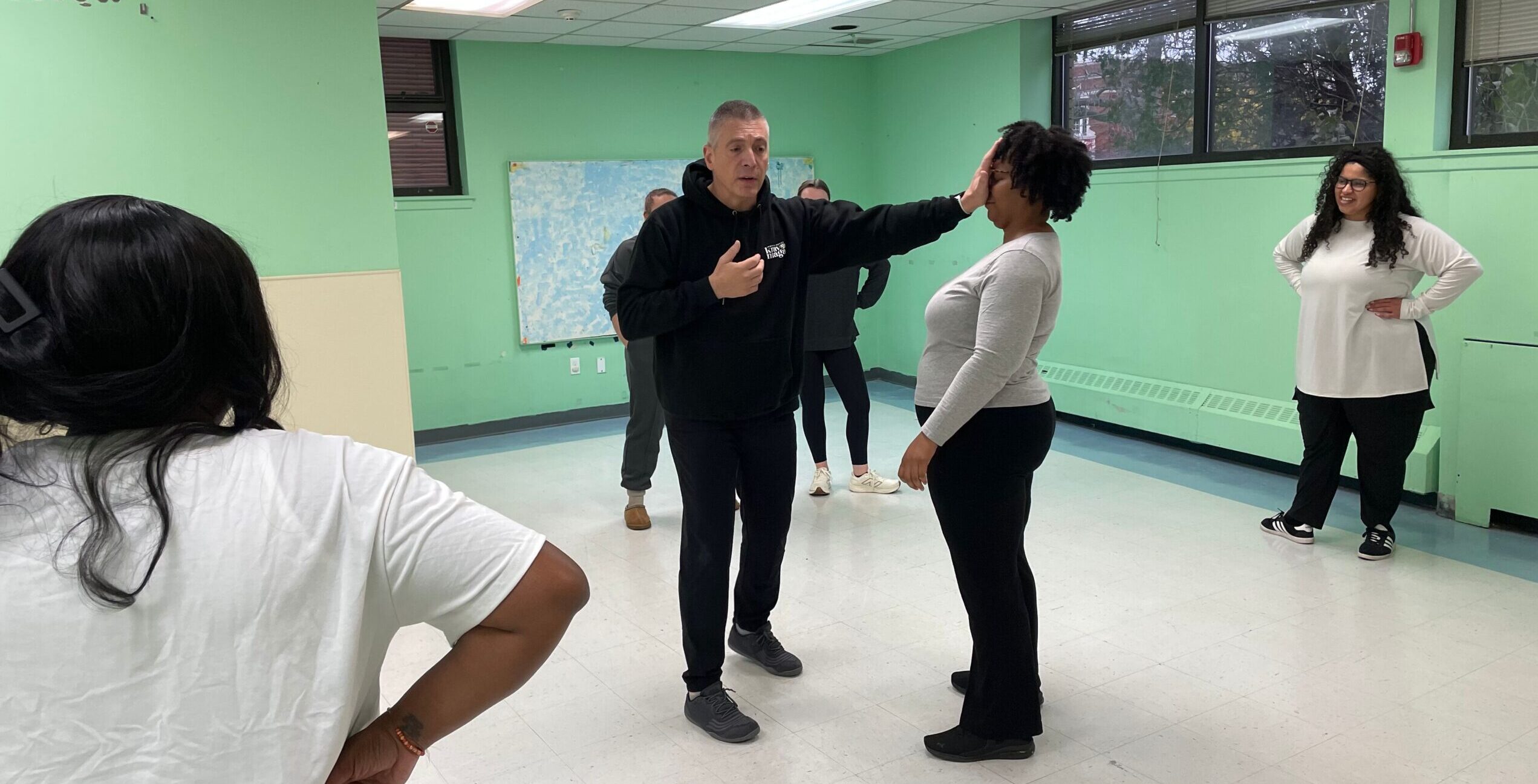
Technique work is slower, deliberate, and repeatable. It’s where you build:
Accurate targeting (eyes, throat, groin—not “close enough”)
Clean hand positioning for protection and control
Balanced footwork so you can move without overcommitting
Efficient mechanics that conserve energy and create options
There’s a well-known martial arts axiom that applies here:
“If you can’t do it slow, you can’t do it fast.”
That’s not philosophy—it’s how the body actually learns.
Fine motor memory is built through repetition your brain can process. When you slow things down, you develop awareness of distance, timing, and angles. That’s what allows you to perform under pressure later. Speed doesn’t create skill—understanding does.
This is where most training programs get it wrong. They jump straight into high-intensity drills because it feels realistic. But without a technical base, you’re just reinforcing bad habits at a higher speed.
At Krav Maga Essentials in Norwalk, aggression training is not the foundation—it’s the test.
You spend the majority of your time building technique slowly and deliberately. Then, every so often, you pressure test that skill with aggression. You increase speed, intensity, and unpredictability to see what holds up.
And here’s the key:
When errors show up—and they will—you don’t just push through. You go back.
Back to slow. Back to deliberate. Back to fixing the details.
Because here’s the truth: you don’t rise to the occasion—you fall to your level of training.
If your training is built on chaos, you’ll get chaos.
If your training is built on precision, you’ll get results.
The correct progression is simple:
1. Slow, deliberate reps – Build accuracy and structure
2. Controlled resistance – Add variables without losing form
3. Aggression training – Pressure test under stress
4. Return to precision – Fix what broke
Now your aggression has direction. Now your movement holds up.
Bottom line:
Aggression prepares you for how it feels.
Technique prepares you for what to do.
At Krav Maga Essentials Norwalk, we build both—but in the right order. Because when things go bad, precision is what cuts through chaos.