

By now, you’ve done something most parents never get around to doing.
You’ve had the conversation. You understand the risks. You’ve thought through the scenarios and taken this seriously enough to follow a four-part series about it.
That genuinely puts you ahead of most families.
But here’s the part that matters most — and the part most parents stop short of:
Conversation does not create capability.
**The Gap That Gets Missed**
Your child might understand what to do. They might be able to explain the framework back to you step by step.
But can they say no clearly when someone is standing in their space and the social pressure is high? Can they move without hesitating when something feels wrong? Can they act decisively in the moment — not after they’ve thought it through for ten seconds?
If the answer isn’t yes, they’re still guessing. And in the wrong moment, guessing is not a strategy.
**Why Training Is Different**
Execution under stress is a skill. Not a personality trait. Not something some people just naturally have.
A skill — which means it is built through repetition, exposure to pressure, feedback, and refinement. Not through discussion.
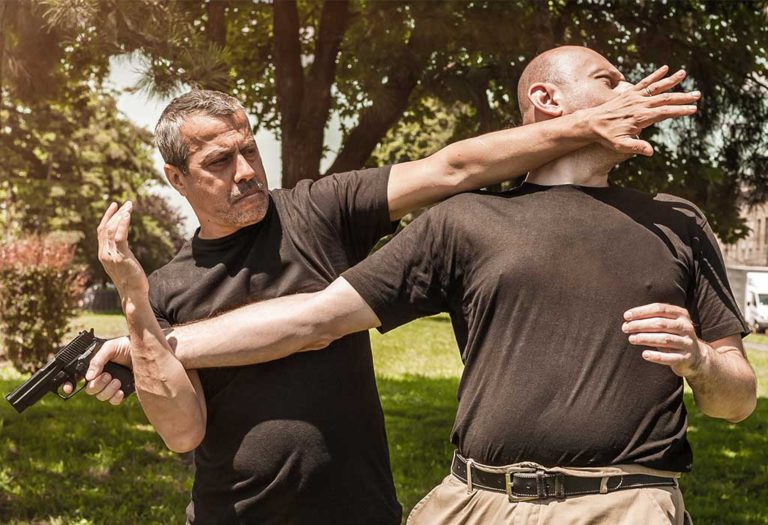
There’s a principle that holds up across every legitimate training program: *If you can’t do it slow, you can’t do it fast.* Real training starts deliberate and controlled. Movements are broken down. Responses are practiced until they feel clunky. Then pressure gets added gradually. When something breaks down under that pressure — and it always does at first — you slow it back down and rebuild it.
That’s how real capability gets built. There’s no shortcut that produces the same result.
**What Confidence Without Experience Actually Looks Like**
It looks completely fine — right up until the moment it isn’t.
Confidence built on conversation and good intentions evaporates fast when something real is happening. Confidence built through training holds, because it has actual experience underneath it.
The families who feel genuinely calm when their kids leave for college didn’t get there by hoping. They took action while there was still time to build something real.
**The Window Is Now**
There is a narrow stretch of time between now and move-in day. That window is the opportunity to take everything in this series — the awareness, the framework, the permission to act — and turn it into something your child can actually execute when it matters.
**Two ways to use that window:**
**Start training.** The BaSix Program at Krav Maga Essentials was built for exactly this moment. Six core skills. Real-world scenarios. Designed specifically for college-bound students — not fighters, not competitors. People who need to know what to do when something happens, and need to be able to do it without thinking. Enrollment is open now at **[kravmagaessentials.com/basix](http://kravmagaessentials.com/basix)**.
**Go deeper on the framework.** *The Krav Maga Essentials Handbook* covers the principles behind everything in this series — awareness, decision-making, and the mental edge that makes physical skills actually work. It’s the foundation your child can carry with them long after move-in day. Available now on Amazon: **[https://a.co/d/0fyZmKJc](https://a.co/d/0fyZmKJc)**
Because when that moment comes, there is no reset button.
—
*You’ve prepared them to succeed. Now prepare them for uncertainty.*
*Over this series, you’ve covered why awareness matters, why hesitation creates risk, what framework holds up under pressure, and how to close the gap between knowing and doing. The only question left: will they be ready when it counts?*