
When people talk about self-defense, they almost always jump straight to techniques. Punches. Kicks. Takedowns. Weapons.
That’s understandable—but it’s also backward.
Most real-world confrontations don’t fail because someone didn’t know what to do. They fail because the person couldn’t think clearly long enough to do anything useful.
Here’s the uncomfortable truth: when humans sense potential violence, we don’t become sharper. We become primitive.
Fear spikes. Anger flares. Adrenaline dumps into the bloodstream. Heart rate skyrockets. Fine motor skills degrade. Vision narrows. Hearing drops out. Time distorts. Your brain shifts from problem-solving mode into survival mode.
That might sound helpful. It’s not.
That physiological cascade makes it harder to assess what’s actually happening, harder to read intent, harder to choose proportional responses, and harder to disengage when an exit is available. In other words, the very emotions people believe will “switch them on” are often the things that get them hurt—or get them arrested.
This is why emotional self-defense matters.
One of the most profound things I ever heard about handling violence was simple and almost boring:
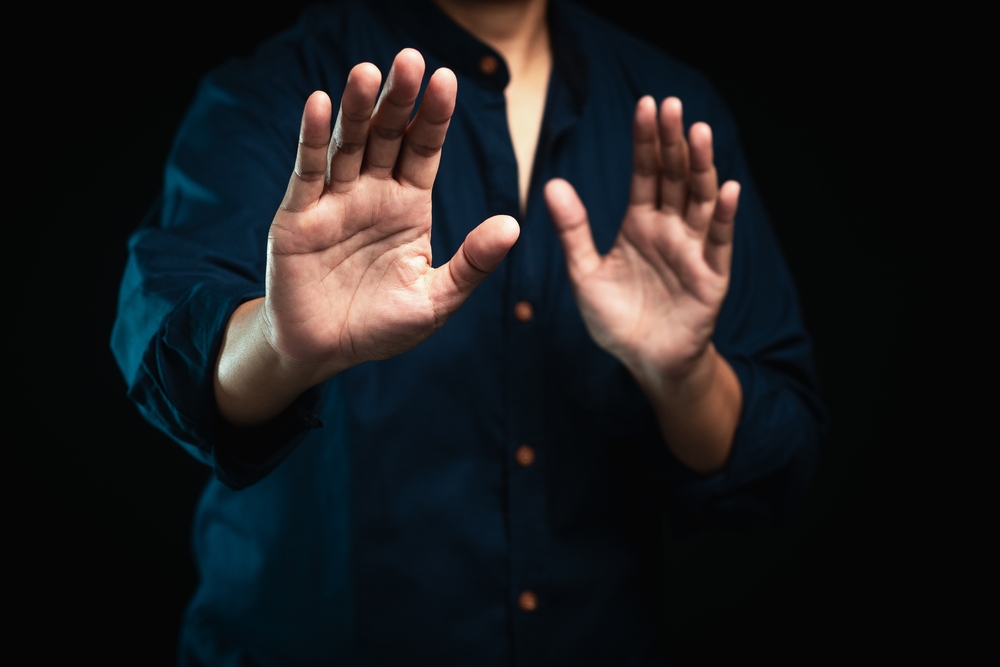
When confronted with violence, raise your hands and lower your temper.
That sentence rewired how I think about self-defense.
Raising your hands isn’t a sign of weakness. It’s a tactical position. It protects your head, creates a natural barrier, allows quick movement, and—critically—looks non-threatening to witnesses and cameras. It buys you time.
Lowering your temper is even more important. Anger feels powerful, but it narrows options. A calm mind sees exits. A calm mind hears tone changes. A calm mind notices when the other person hesitates, postures, or gives you the moment you need to disengage.
Self-defense isn’t about “winning” a fight. It’s about ending danger with the least cost possible.
That requires emotional regulation under stress—something most people never train.
In Krav Maga Essentials, we talk a lot about what happens before anything turns physical. The moment when voices rise. Space collapses. Boundaries are tested. That’s where self-defense is either won or lost.
If you can control your breathing, keep your hands up, and keep your ego out of the exchange, you’re already ahead of 90% of people. You’re harder to manipulate. Harder to bait. Harder to escalate against.
And here’s the irony: the calmer you stay, the faster you can act if action becomes unavoidable. Calm doesn’t mean passive. It means prepared.
Real self-defense is the ability to think clearly while your body is screaming at you to panic or explode. That’s not instinct. That’s training.
Raise your hands.
Lower your temper.
Give yourself the chance to leave safely.
That’s what self-defense actually looks like.