

I just got back from Tampa.
Airport crowds. Security lines. Tight aisles.
All of it while I’m a week away from hip surgery—moving slow, awkward, and relying on a cane.
It forced a shift in mindset.
Not as an instructor. As a student of reality.
Because right now, I don’t move the way I normally do. And that changes everything about how I think about self-defense.
—
Reality First: Self-Defense Is About What You Can Do Today
At Krav Maga Essentials in Norwalk, one of the first things we teach is this:
Self-defense is not about techniques. It’s about making the right decision based on your current ability, environment, and the law.
In a duty-to-retreat state like Connecticut, the expectation is clear—if you can leave safely, you must.
Stay longer than necessary, and you risk crossing into assault.
As Rory Miller once said to me, if we don’t teach that, we’re “teaching our students how to go to jail.”
So the objective is simple: create the opportunity to disengage and get to safety.
—
Fully Capable: Disrupt and Go
If you’re physically capable—strong, mobile, explosive—your strategy should reflect that advantage.
You don’t need to do much.
At Krav Maga Essentials, we emphasize:
Situational awareness to avoid the problem early
Verbal boundary setting to prevent escalation
Simple, effective strikes to create a moment of disruption
Immediate disengagement
If you can move well, you should be gone fast.
The longer you stay, the worse your legal position becomes.
—
Physically Limited: The Strategy Has to Shift
But what if you can’t move well?
Age. Injury. Illness. Or even something temporary—like where I am right now.
I’m not sprinting anywhere. I’m not pivoting quickly. I’m not getting multiple chances to escape.
So now the strategy changes.
At Krav Maga Essentials, we teach that if your ability to leave is limited, you may need to do more before you can leave.
That includes:
Targeting vulnerable areas to create a more decisive interruption
Using tools and environment (yes, even a cane) as force multipliers
Committing fully to the moment so you can buy the time you need
Not out of aggression—but necessity.
If you can’t move fast, you must create the conditions that allow you to move at all.
—
Environment Can Limit You Too
Even a fully capable person can become “limited” based on terrain.
Airports. Parking garages. Hallways. Crowded sidewalks.
No clean exit means your strategy has to adapt.
That’s why our training in Norwalk focuses heavily on real-world scenarios—not perfect conditions.
—
What We Teach at Krav Maga Essentials
Our program is built around reality, not theory.
We focus on:
Awareness and threat recognition
De-escalation and verbal skills
Strategic striking—where, when, and why
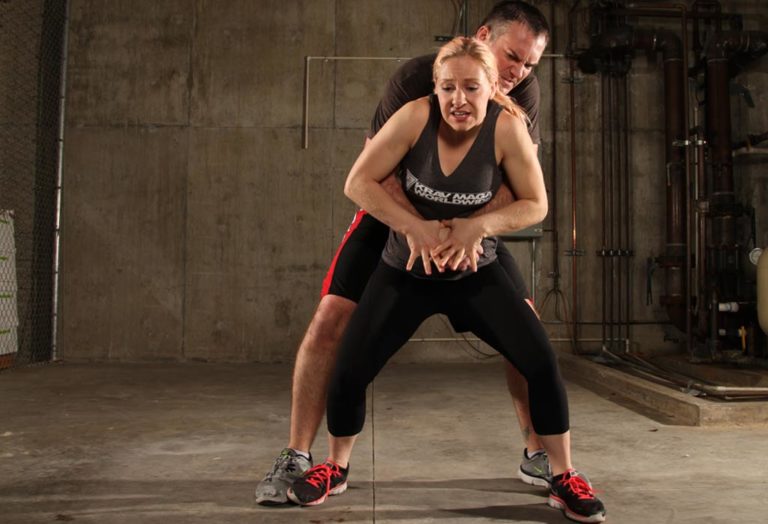
Escaping holds and preventing abduction
Ground survival and getting back to your feet
And most importantly, understanding when enough is enough so you can leave safely and legally.
—
The Bottom Line
An athletic defender may only need one clean disruption to escape.
A physically limited defender may need to create a bigger interruption.
Same goal. Different path.
Self-defense is not one-size-fits-all.
It’s about adapting to your reality—your body, your environment, your limitations—and making the decision that gets you home safely.
That’s what real training looks like.