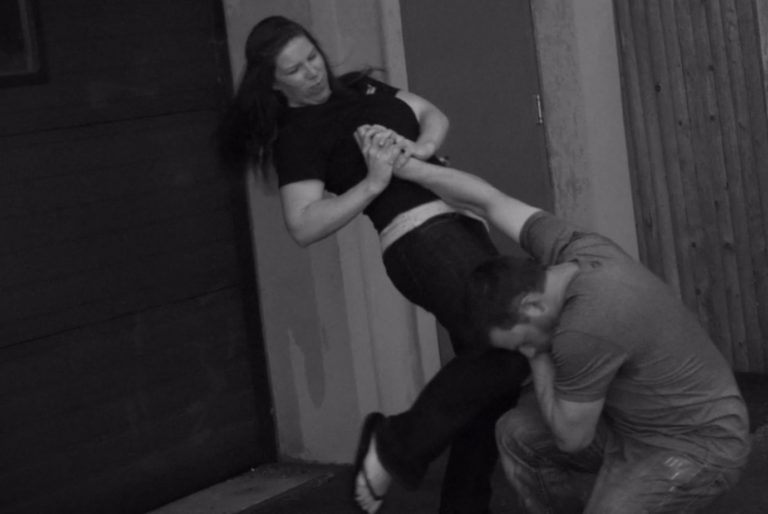


Most people think self-defense starts with a punch, a kick, or a clever technique learned in class. It doesn’t. Real self-defense begins much earlier, in a far more personal place: the moment you decide that you are worth defending.
That decision is the true line in the sand.
Many self-defense programs focus almost exclusively on physical attributes and technical execution. They teach strikes, escapes, positioning, and movement—and those skills absolutely matter. But what is often missing is the conversation that determines whether those skills ever get used. At some point, every real-world encounter forces a simple but uncomfortable question: When do I stop tolerating this and take charge of the situation?
At Krav Maga Essentials, we remind students of something that is rarely stated clearly enough—you get to decide when self-defense begins. Not the attacker. Not bystanders. Not social expectations. You. Your level of comfort and your sense of concern are valid indicators, not weaknesses to be ignored.
Violence almost never starts with violence. It starts with pressure. Boundary testing. Someone standing too close, touching too long, ignoring verbal cues, or pushing a situation just far enough to see what they can get away with. The failure point for most people is not physical inability—it’s hesitation rooted in permission. They don’t believe they are “allowed” to act yet.
That hesitation is usually learned. We are conditioned from an early age to be polite, accommodating, and non-confrontational. We are taught not to make a scene, not to be rude, not to overreact. While those instincts may serve us in everyday social life, they become dangerous when someone else has decided your comfort and safety no longer matter. In those moments, politeness doesn’t de-escalate risk—it extends it.
For some, this tolerance comes from upbringing. For others, it’s tied to self-worth or self-image issues that quietly justify the aggressor’s behavior. Thoughts like “Maybe I’m overreacting,” “I don’t want to offend them,” or “It’s probably nothing” delay action while the situation worsens. None of those thoughts stop a threat. They simply give it more time.
Self-defense is not about becoming aggressive—it’s about becoming decisive. It’s about recognizing that discomfort is not something to explain away. Concern is not something to suppress. At Krav Maga Essentials, we emphasize that if something feels wrong, that feeling is enough. You don’t need permission. You don’t need validation. You don’t need to wait for a textbook definition of danger.
The physical techniques are tools. But tools only work when paired with the belief that you deserve to use them. The hardest part of self-defense is not learning how to strike or escape—it’s accepting, without apology, that your safety matters more than someone else’s opinion of your reaction.
When that belief is in place, action becomes possible. Clear. Decisive. Controlled. And that clarity is what turns fear into effective self-defense—on your terms.