
There’s a moment after injury—mine happened after hip surgery—where reality strips away assumptions. A friend casually said, “That was your kicking leg.” He meant nothing by it. But it exposed a flaw I see all the time in self-defense training.
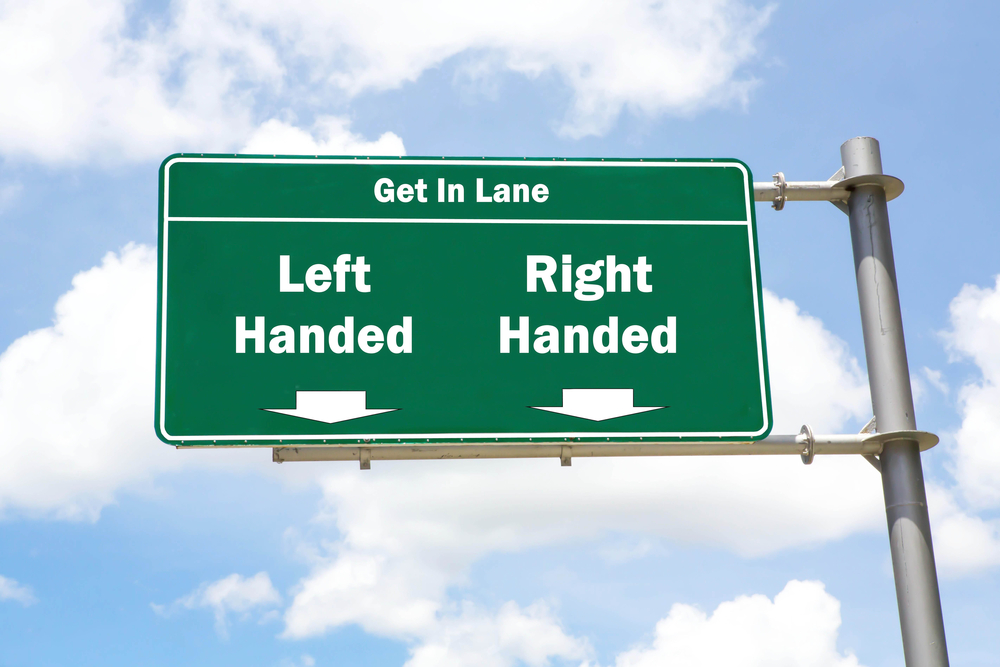
Too many people only train their dominant side.
It works—until it doesn’t.
In a controlled environment, you can favor your right hand, your right leg, your preferred stance. But violence doesn’t care about your preferences. It doesn’t give you time to reset, switch sides, or find your balance. It shows up fast, chaotic, and from angles you didn’t plan for.
And sometimes, your “best tools” just aren’t available.
In my case, surgery took my right side out of play—at least temporarily. But that’s just one example. You could be knocked to the ground and land awkwardly. You could take a hit that compromises a limb. Or the attacker simply approaches from your non-dominant side, forcing you to respond from a position you’ve barely trained.
If your system only works when everything is perfect, it’s not a system. It’s a liability.
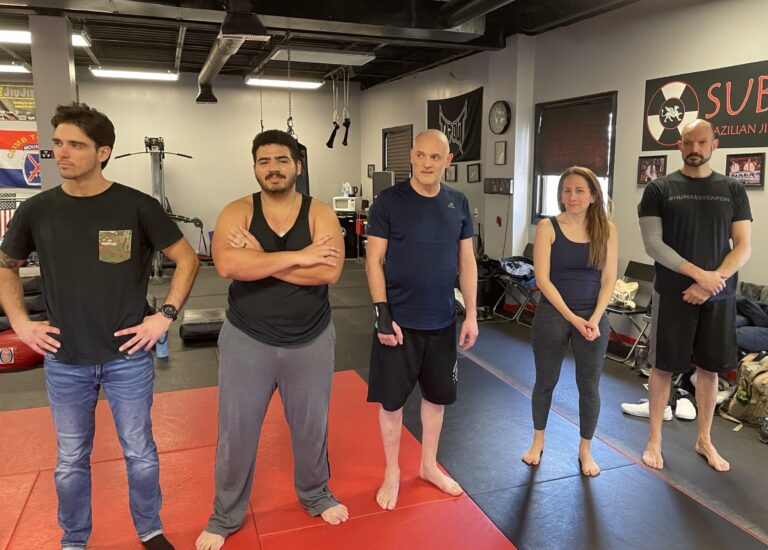
At Krav Maga Essentials in Norwalk, we address this head-on. From day one, training both sides is not optional—it’s foundational. Every strike, every defense, every movement pattern gets worked on the right and the left. Not because it’s “nice to have,” but because it’s necessary.
Here’s why.
Under stress, your body doesn’t rise to the level of your expectations. It falls to the level of your training. If you’ve only drilled your dominant side, your brain will hesitate when forced to operate from the other. That hesitation? That’s where things go wrong.
But repetition changes that.
When you deliberately train your non-dominant side—slow, controlled, and with purpose—you build functional capability. You’re not trying to make it perfect. You’re making it usable. Reliable. Available under pressure.
That’s the difference.
Right now, my right side isn’t what it usually is. But I’m not out of the fight. Not even close. Because my left side has been trained through repetition and pressure testing. It’s not theoretical—it works.
That’s what we’re after.
Whether we’re talking about striking, defending chokes, escaping grabs, or getting off the ground, you need the ability to operate in both directions with reasonable comfort. Violence is unpredictable. It’s a constant set of variables—angle, timing, environment, injury, fatigue.
You don’t get to choose the conditions.
You only get to choose how prepared you are.
If you build skill on one side, you’re limiting your options. If you build capability on both, you double them. You give yourself more ways to respond, more ways to adapt, and more ways to survive.
And make no mistake—that’s the goal.
Not to look good. Not to win a sparring round. To survive a violent encounter and get home.
So here’s the takeaway: stop thinking in terms of “strong side” and “weak side.” Start thinking in terms of “trained” and “untrained.”
Build both.
Because the day you need it won’t come with a warning—and it definitely won’t come on your terms.