
Sometimes art imitates life. And sometimes it does it with enough force to knock you off your feet.
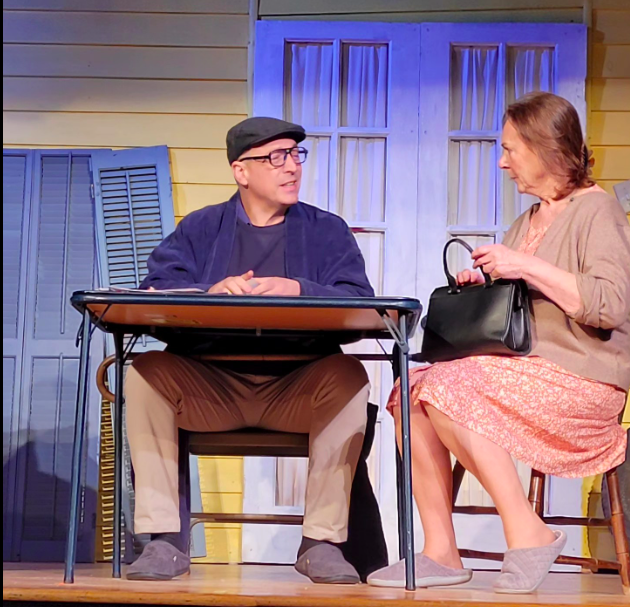
Recently, I was on stage performing a two-person play. The scene was intense—my character escalates emotionally, crossing a line and delivering something aggressive and deeply upsetting to my scene partner. Her character’s response? A slap across the face.
Now, this wasn’t supposed to be anything more than stage combat. Controlled. Measured. Safe.
That’s not what happened.
My scene partner—who happens to be 74 years old—connected in a way that was anything but theatrical. The strike landed clean, loud, and with real force. I outweigh her by over 80 pounds and have about 15 years on her. On paper, there’s no comparison.
But in that moment, none of that mattered.
The instant her hand hit, I was dropped straight into an OODA loop disruption. I lost time. Not metaphorically—literally. There were a couple of beats where I had no idea where I was in the scene. My ears were ringing. My balance was compromised to the point that I got knocked backward into a chair. I nearly missed my next line.
Understand this: I knew it was coming.
I knew the line that triggered it.
I knew the cue.
I knew the choreography.
And I still couldn’t do a thing about it.
That’s where art stopped being art—and started being a perfect real-world self-defense lesson.
In self-defense training, we talk constantly about disrupting the attacker’s OODA loop—Observe, Orient, Decide, Act. If you can interrupt that cycle, even briefly, you create a window. A moment where the attacker is no longer processing effectively. A moment where they are behind the action.
That moment is your opportunity to escape.
What happened to me on that stage is exactly what we train for in Krav Maga training in Norwalk. A smaller, older individual delivered a well-placed strike to a vulnerable target and instantly neutralized someone larger, younger, and fully aware of what was about to happen.
That’s not theory. That’s reality.
One of the most important self-defense techniques is targeting. You don’t need to overpower someone. You don’t need to trade strength for strength. You need precision. You need intent. You need to hit something that matters.
In this case, it was essentially a “boxing the ears” effect—disrupting equilibrium, creating disorientation, and shutting down my ability to think clearly for those critical seconds.
Seconds matter.
Those couple of beats where I was out of the fight? In the real world, that’s everything. That’s the difference between being stuck in a dangerous situation and getting out safely.
This is exactly what we emphasize in Krav Maga self-defense classes in Norwalk: you are not trying to win a fight—you are trying to break the moment and escape.
Whether you’re a college student, a parent, or someone simply looking for practical personal safety training, the lesson is the same—awareness, timing, and targeting beat size and strength.
What happened on stage was unplanned. But the lesson couldn’t have been clearer.
You don’t rise to your expectations.
You fall to your level of preparation.
And sometimes, if you’re paying attention, life delivers the lesson for you—live, unscripted, and impossible to ignore.