

Every once in a while, a story hits you so hard that it becomes part of your teaching forever. This one came from my instructor, and it perfectly illustrates a core lesson we drive home in Krav Maga Essentials: if your training isn’t honest, your reactions won’t be either.
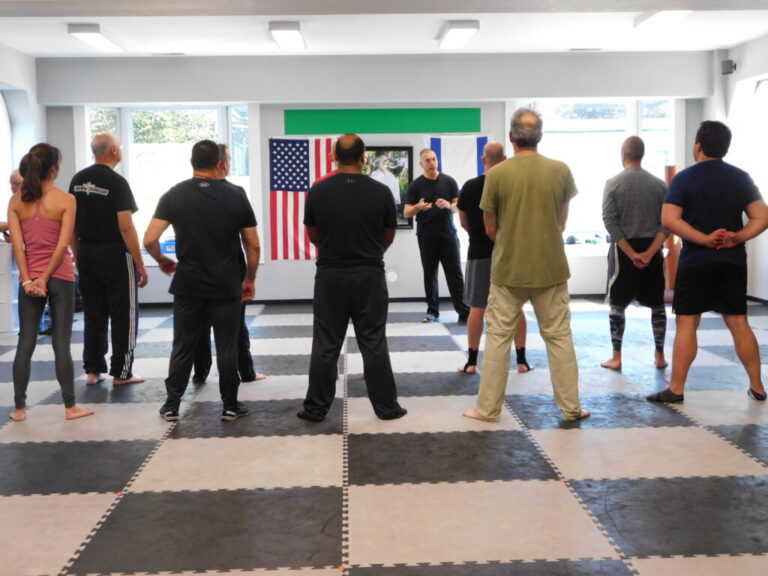
Years ago, he was running an outdoor knife-defense class in a public park. Students were drilling, working through the motions, doing what many people do when the knife is rubber and the threat feels hypothetical.
On a nearby bench sat an elderly Asian gentleman, quietly studying every drill. He wasn’t casually watching—he was analyzing. After a few rounds, my instructor walked over and asked what he thought.
The man didn’t soften his words. He simply said, “Your students aren’t reacting honestly.”
Not rude. Not wrong. Just accurate.
When my instructor asked him how the drill could improve, the man didn’t answer. Instead, he picked up the rubber knife, walked off into the park, stopped near a pile of dog poop, and—without a word—rubbed the training blade right through it. Thick coating. No hesitation.
Then he handed it back.
No speech. No critique. Just a quiet invitation: Now make the drill real.
The moment that knife re-entered the training circle, everything changed. Students who had been treating the drill like choreography suddenly moved with urgency. Nobody wanted that blade anywhere near their body. They redirected faster, created distance quicker, and treated the “attack” with the seriousness it deserved.
Nothing about the technique changed. Only the stakes did.
And that’s the entire message.
In Krav Maga Essentials, we remind students constantly: when violence hits, you won’t rise to your expectations—you will fall to the level of your training. If you train casually, you’ll respond casually. If you train with fake intensity, you’ll react with fake intensity. Stress doesn’t magically produce better habits; it reveals the ones you’ve built.
That gentleman in the park gave us a simple, uncomfortable truth: when the threat feels real, we behave honestly. When the threat feels safe, we behave lazily.
That gap is where people get hurt.
Self-defense isn’t performance. It isn’t choreography. It isn’t about looking good. It’s about conditioning your body and mind to respond with purpose, clarity, and efficiency when the moment demands it.
We react exactly how we train.
So train like it matters—because one day, it might.
That’s what we teach.
That’s why it works.